I've always seen the world as a photograph waiting to happen. It's less a hobby than a habit of mind — I'll be standing in front of something enormous and find myself honing in on one small detail inside it, already knowing how it would crop.
For the past decade, travelling with my partner, that instinct has had plenty to work with. More than I probably deserve, honestly. I've photographed the crowds moving through Tokyo at night, and the thin light at the top of the Aiguille du Midi, with the summit of Mont Blanc across the valley. Glacier National Park, where the Rockies arrive all at once and no lens is ever quite wide enough. Joshua Tree, where the desert does the exact opposite with the light. I've stood under the northern lights three times — Alaska, Canada, Iceland — and watched a total solar eclipse pass over the grounds of Nashville Zoo, a few minutes of the strangest light I've ever seen, or am ever likely to.

Aiguille du Midi, Chamonix — Mont Blanc across the valley.

Many Glacier Hotel, Glacier National Park, Montana.

Sunrise, Joshua Tree National Park, California.

Northern lights outside Reykjavik, Iceland.
None of it has made me want to live anywhere else. The place I keep coming back to is the one I already live in.
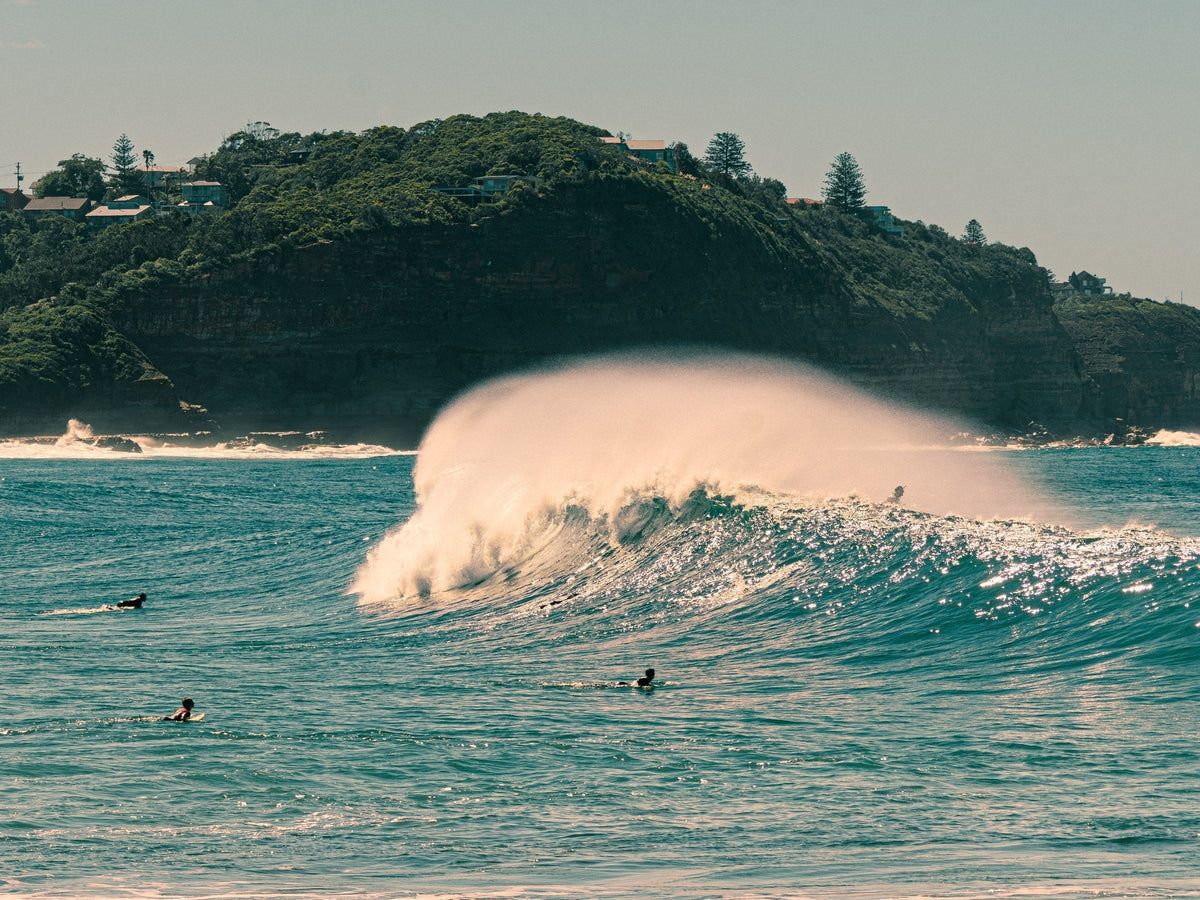
I moved to the Central Coast fifteen years ago to be closer to family, after years of inner-Sydney life around Newtown and Erskineville. It was meant to be a practical decision. What I got was room to breathe — ocean, bush and waterways on the doorstep, and a coastline I still photograph constantly. Terrigal, Avoca, Saratoga, Patonga. Every trip overseas ends the same way: back here, camera out, finding something new in a stretch of sand I've walked a thousand times. This is the place that draws me home.

Sunrise, Terrigal Beach.

Saratoga, sunrise.
For a long time, none of it went anywhere. The photographs lived on a hard drive and in the occasional Facebook album, and friends would tell me I ought to do something with them. I had a long career in corporate leadership that paid the bills and left very little room for anything creative. That was that — until early 2026, when I stepped back, took stock, and decided to finally give the photography the time it deserved.
Coast & Compass came out of that.
One photograph, many lives
The part I didn't expect to love most is what happens after the photograph.
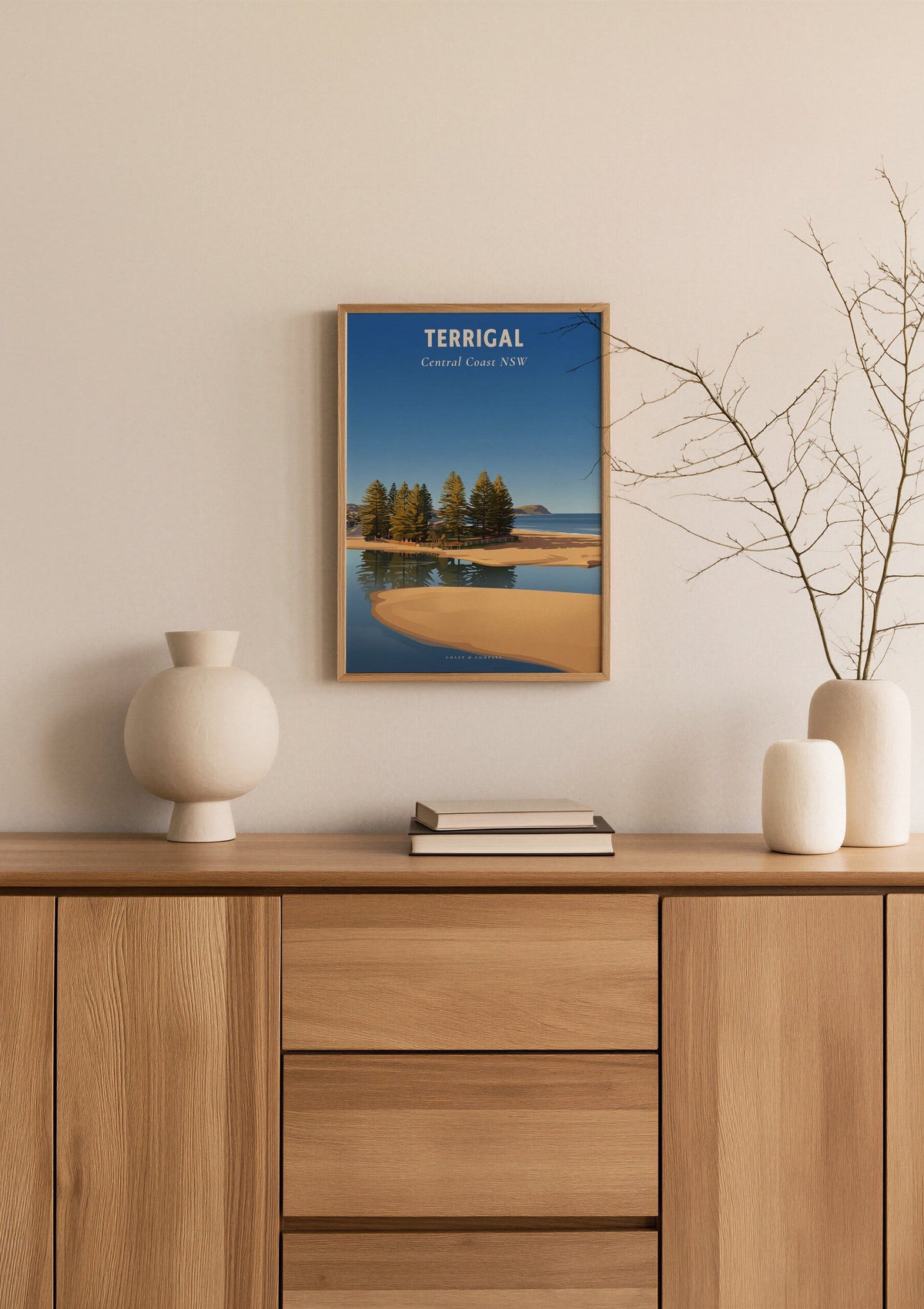
A single image doesn't have to stay one thing. It becomes a travel poster first — composition tightened, colour and light worked until it holds up as a piece of art in its own right. Then I'll take a fragment of that same image — a rock pool, a roofline, the shape of a wave — and rotate and repeat it until it becomes a pattern that looks nothing like where it came from. Same photograph. Completely different kind of beauty.

Norfolk pine.
Made here, made to keep
Two things I'm not willing to compromise on.
The first is where things are made. The posters are printed in Erina, a few minutes from my house, on museum-grade fine art paper, by a business I can walk into and talk to. As the range grows the same principle applies — Australian suppliers, small batches, people I've actually spoken to. It costs more that way. I'd rather it cost more.
The second is that everything has to be worth keeping. There's a particular kind of thing that gets bought, used twice, and ends up at the back of a cupboard. I've no interest in making that. A poster should be something you still notice years later. A tea towel should be good enough to reach for, and good enough to look at that you don't mind it hanging on the oven door. Something that brings a bit of joy both to look at and to use — and lasts long enough to keep doing it.
That's the whole idea, really. Photographs from places I've actually stood, made into things designed to be lived with rather than replaced.
From lens, to living.