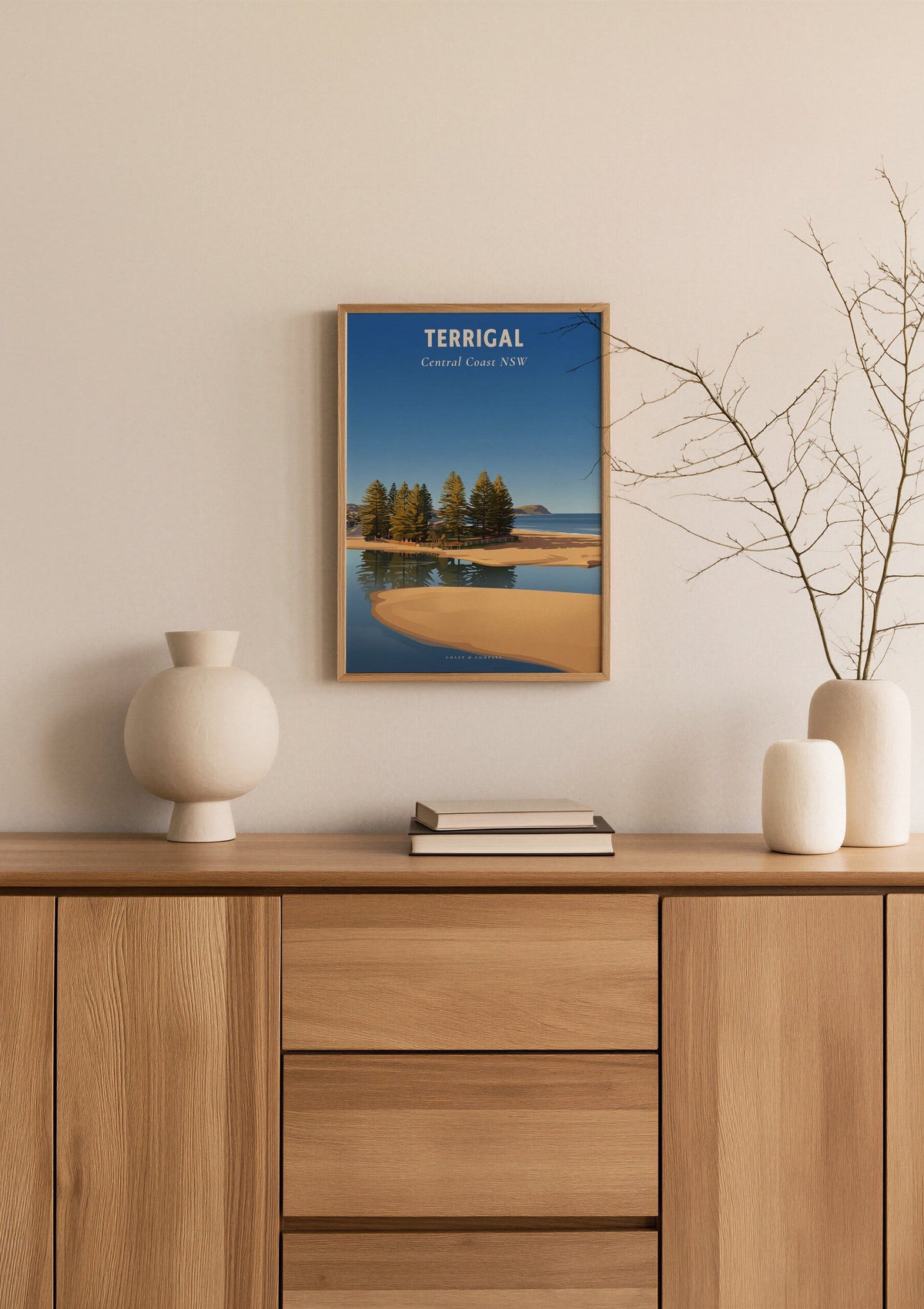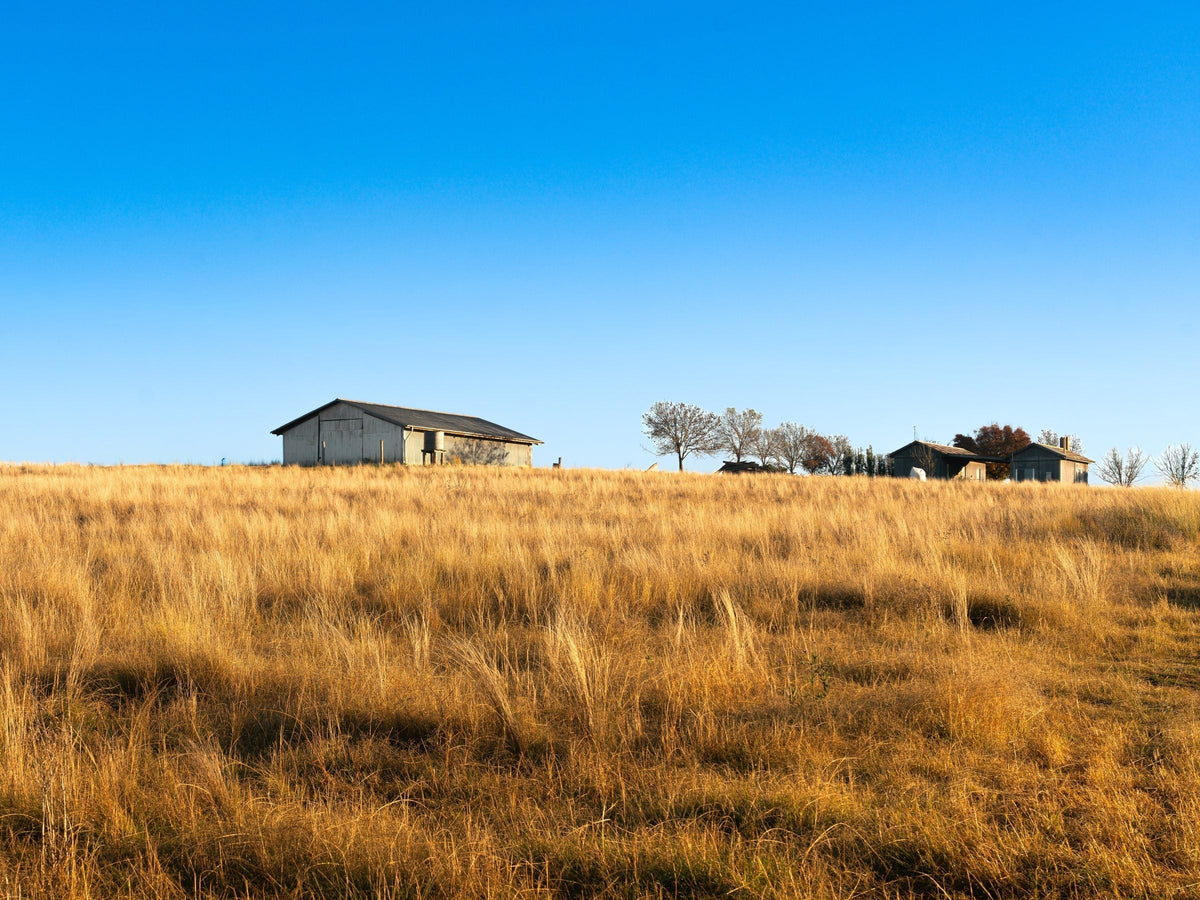
On the homepage there's a slider you can drag: a barn on one side, the same barn on the other. One is a photograph. One is a finished piece. This is what happens in between.
The barn
We found the place in 2021. The world was still in lockdown, overseas travel was off the table, and we'd started looking closer to home — which is how we ended up at an Airbnb in the middle of a vast sheep farm near Dunedoo, in the central west of New South Wales. About as far from the coast as you can get and still be in the same state.
It had a particular kind of energy to it. I felt it as soon as we arrived, and I've never been able to explain it much better than that. We've been back several times since, and I've photographed that barn from just about every angle there is. Some of that work will find its way into future collections.

Most photographs don't get past the first cut. I come home from a trip with hundreds and a handful survive. What I'm looking for isn't the best view — it's the frame that already has a shape to it. A roofline. A ridge. The curve of a bay. Something that will still hold up when everything incidental is stripped away. If a photograph only works because of what it's a picture of, it won't survive the next step.
Developing the photograph
The first real work is light and colour. This is ordinary photographic processing — the same thing photographers have done in a darkroom for a century, done now on a screen. Bringing up what the sensor flattened, letting the shadows sit where they should, getting the colour closer to what it actually looked like standing there than to what the camera decided.
At this stage nothing moves and nothing is added. It's still a photograph of a real place on a real afternoon.
Moving with the technology
Then the photograph becomes a design, and this is the part worth being straight about: Coast & Compass uses AI-assisted tools in the design stage.
I've thought about how to talk about that, and the honest answer is that photography has never stopped changing. It started with a head under a black sheet and a glass plate, and hours in a darkroom. Then it was film — drop the roll at the local shop, wait days, and hope it turned out something like you remembered, with almost no control over what came back. When digital arrived, plenty of people said it wasn't real photography. Now it's simply what photography is.
Every one of those shifts changed what a photographer could do with an image after the shutter closed. This is another one. The tools work from my photograph — it stays the reference the whole way through, not a prompt typed into an empty box. The composition is the one I framed. The place is the place.
What the tools help with is translation: turning a photograph into the flat, graphic poster style the range is built on. Colour shifts. Light gets pushed. The finished piece is a long way from a photograph, and it's meant to be — that's the whole point of it being a poster rather than a print of the original frame.
At the core of it, whether it ends up as a travel poster, an art print or a pattern, it's still my photograph. I stood there. I took it. I've spent the hours developing it and shaping it into something new.
I'd rather move with the times than fight them.

And then it gets printed
The last step is the least glamorous and the one I'm most particular about. Every print is made on museum-grade fine art paper by a printer in Erina, a few minutes from my house — a business I can walk into, hold a proof up to the light, and talk to. Nothing is printed offshore, and nothing is printed in bulk to sit in a warehouse. Each one is made when someone orders it.
That's the whole journey. A photograph taken somewhere real, worked on properly, turned into something you can live with, and printed down the road.
From lens, to living.